
Smart glasses are coming to your workplace. Here’s how to update your Canadian policies.
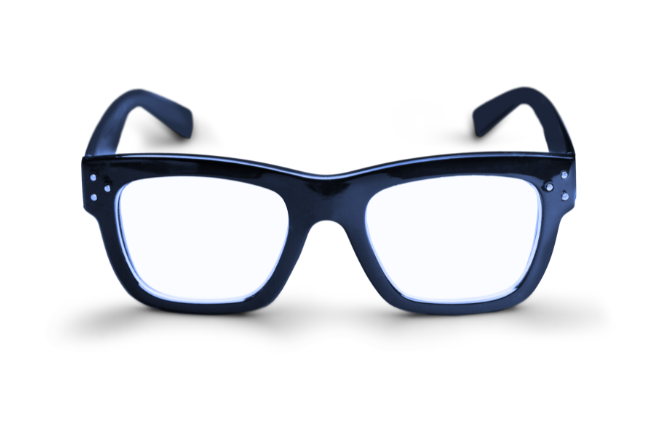
Smart glasses are no longer futuristic. As of July 2026, employees, customers and visitors are already wearing AI-enabled devices such as Ray-Ban Meta glasses, which can take photos, record video, livestream, translate conversations and access AI assistance, all far more discreetly than a traditional phone or camera.
Most employee handbooks weren’t written with this technology in mind.
The good news? Most employers don’t need a brand new policy. They simply need to update the policies they already have.
That way, when AI earbuds, AI lapel pins, smart contact lenses, or whatever comes next arrive, the policy still works without needing another update.
Review the policies you already have.
Rather than creating a standalone Smart Glasses Policy, review and update your existing:
- Acceptable Use of Technology Policy
- Confidentiality Policy
- Privacy Policy
- Code of Conduct
- Information Security or Cybersecurity Policy
- Workplace Violence and Harassment Policy, where inappropriate recording or misuse of technology could contribute to harassment, bullying or intimidation
The right approach depends on your workplace. Some employers may permit wearable devices for legitimate business purposes. Others may prohibit them entirely or restrict their use in sensitive work areas.
Your policy should focus on the behaviour, not the technology. Today’s smart glasses will eventually be replaced by something else.
Remember that recording isn’t always illegal.
Many employers assume they can simply prohibit employees from recording conversations because recording without consent is illegal.
That’s not how Canadian law works.
Generally speaking, a person may legally record a conversation if they are participating in it. However, that doesn’t prevent an employer from establishing reasonable workplace rules governing recording, confidentiality, privacy, security and the use of workplace technology.
Whether disciplinary action is appropriate will always depend on the circumstances, the clarity of the policy, applicable legislation and, where applicable, the collective agreement.
What your policy should address.
At a minimum, your policies should address:
- unauthorized recording of workplace conversations or meetings;
- photographing or recording confidential, proprietary or personal information;
- recording customers, clients, patients, suppliers or co-workers without authorization;
- uploading or processing Company information using AI-enabled wearable devices;
- when wearable technology is permitted for legitimate business purposes;
- approval requirements before a wearable device may be used;
- how information must be stored, protected and deleted when recording is authorized.
Sample Policy: Wearable Technology, Recording & AI-enabled Devices
If you prefer to create a stand-alone policy, you can use the following.
This sample policy is intended as a general Canadian starting point for non-unionized private-sector employers. It should be reviewed and adapted to reflect the provinces in which your employees work, your industry, applicable privacy legislation, and any collective agreement or sector-specific legal requirements.
The Company recognizes that smart glasses, wearable technology and other AI-enabled devices may be capable of recording, photographing, livestreaming, transcribing, analyzing, storing, processing or transmitting workplace information.
This policy applies to Company-issued and personally owned devices used in the workplace, while conducting Company business, during virtual meetings, at Company events, at client or customer locations, or while accessing Company information.
Prohibited Use
Unless the Company has provided prior written authorization, employees must not use wearable devices or other technology to:
- audio record, video record, photograph, livestream or transcribe workplace conversations, meetings or activities;
- capture performance discussions, investigations, disciplinary meetings, termination meetings or other confidential employment matters;
- photograph or record confidential, proprietary, commercially sensitive or personal information;
- record employees, customers, clients, patients, suppliers, contractors or visitors without authorization;
- upload, submit or transmit Company information to AI platforms, cloud services or other third parties unless authorized;
- use wearable technology in a manner that creates a privacy, confidentiality, cybersecurity, safety or operational risk; or
- conceal or misrepresent the recording capabilities or use of a device.
Employees must not record conversations or activities in which they are not participants unless specifically authorized by the Company and permitted by law.
Authorized Business Use
The Company may authorize wearable technology for legitimate business purposes, including training, inspections, accessibility accommodations, safety or other operational needs.
Written approval must be obtained from the designated Company representative before use. Approval may be limited by purpose, location, duration, device, user or the type of information involved and may be withdrawn at any time.
Employees must comply with all conditions attached to that approval, including any requirements relating to privacy, confidentiality, storage, security, retention and deletion of information.
Information collected through an approved device may only be used for the purpose for which authorization was granted unless otherwise required or permitted by law.
Accommodation
Employees requiring wearable technology because of a disability or another protected ground should request accommodation through the Company’s accommodation process.
Accommodation requests will be assessed individually in accordance with applicable human rights legislation. Approval of an accommodation does not necessarily permit unrestricted recording or collection of workplace information.
Protected Legal Rights
Nothing in this policy is intended to limit an employee’s rights under applicable employment standards, human rights, occupational health and safety, labour relations, whistleblower, privacy or other legislation, or to prevent an employee from participating in a lawful investigation or legal proceeding.
Compliance
Employees are expected to comply with this policy together with the Company’s confidentiality, privacy, acceptable use, cybersecurity and records management policies.
Failure to comply with this policy may result in corrective or disciplinary action.
Don’t forget customers & visitors.
Employees aren’t the only people wearing smart glasses.
Depending on your workplace, you may also wish to prohibit or restrict customers, contractors, suppliers or visitors from recording on your premises, particularly where confidential information is handled or employee privacy could be compromised.
The Bottom Line
AI-powered wearable technology is evolving quickly, and workplace policies need to keep pace.
The devices themselves will continue to change. The legal principles won’t. Employers should focus on protecting confidential information, respecting privacy, clearly defining acceptable use, and ensuring employees understand the rules before problems arise.
If your employee handbook still assumes recording only happens with a cellphone, it’s probably time for an update.
We help reduce the HR load.
Practical. Cost-effective. 100% Canadian.
We’ll create your HR foundation with HR Essentials.
Since 2006, more than 10,000 Canadian employers have trusted ConnectsUs HR for HR tools, resources, and support. HR services are now delivered through Sienna HR.
Same team. Same service. Same standards.
Every HR service engagement includes a complimentary 1-year HR Toolkit subscription (a $700 value).